

In today’s world, hearing loss is a condition that affects millions of people across the globe. Jalandhar, a bustling city known for its rich culture and growing population, is not immune to this issue. From the young to the elderly, hearing loss touches the lives of many, often without them realizing the extent of the problem or the solutions available. Whether you’re currently dealing with hearing loss or at risk, it’s crucial to understand this condition, the different types of hearing impairments, the factors that contribute to it, and most importantly, the role hearing aids play in improving one’s quality of life. In this blog, we’ll take a deep dive into hearing loss, its impact on the community in Jalandhar, and why it’s time to take hearing health seriously.
What is Hearing Loss?
Hearing loss is a condition that affects a person’s ability to hear sounds in one or both ears. It can range from mild to profound, and its causes can vary significantly. The most common forms of hearing loss are sensorineural, conductive, and mixed.
- Sensorineural Hearing Loss: This is the most common type and occurs due to damage to the inner ear or the auditory nerve. It can result from aging (presbycusis), exposure to loud noises, infections, or injuries. Once these delicate cells are damaged, they don’t regenerate, making sensorineural hearing loss permanent.
- Conductive Hearing Loss: This type occurs when sound waves cannot properly reach the inner ear, often due to blockages or damage in the outer or middle ear. Causes include ear infections, fluid in the ear, earwax buildup, or a perforated eardrum. Medication or surgery is commonly used to address conductive hearing loss in many cases.
- Mixed Hearing Loss: This type of hearing loss, called mixed hearing loss, involves both sensorineural and conductive factors. Individuals with mixed hearing loss may experience both damage to the inner ear and physical blockages.
Understanding these different types is essential, as it can guide you in finding the right treatment. Unfortunately, many people in Jalandhar, particularly the elderly, may not recognize the early signs of hearing loss, leading to a delay in diagnosis and treatment.
Causes and Risk Factors for Hearing Loss
In Jalandhar, hearing loss can affect people of all ages, though certain groups are more susceptible. The causes and risk factors for hearing loss can be broadly categorized as follows:
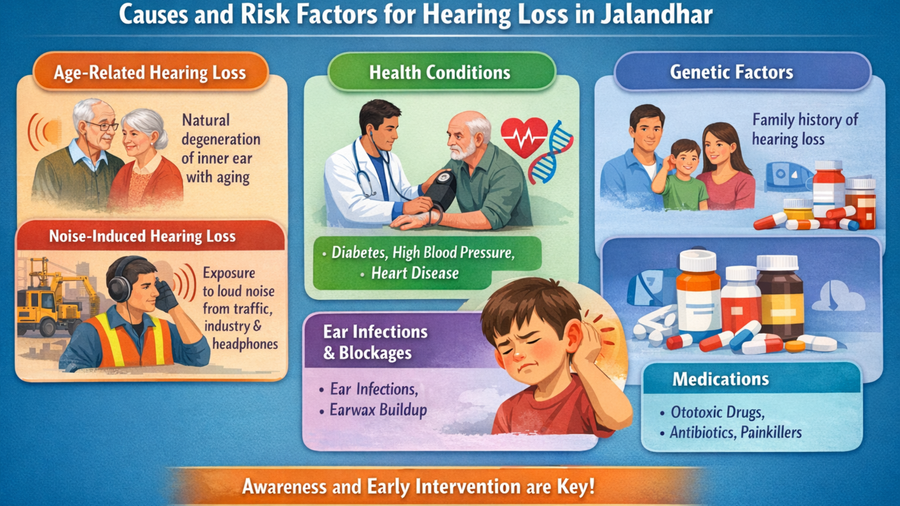
- Age-Related Hearing Loss (Presbycusis)
Aging leads to the natural degeneration of hair cells in the inner ear. This leads to gradual hearing loss, typically affecting high-frequency sounds first. By the time people reach their 60s or 70s, presbycusis can be a significant problem. In Jalandhar, the aging population may be at greater risk due to a lack of awareness and early intervention. - Noise-Induced Hearing Loss
Jalandhar, like many industrial cities, is home to constant noise from traffic, construction, and industrial activity. Exposure to loud sounds over time can cause permanent damage to the auditory cells in the inner ear, leading to permanent hearing loss. Young adults and workers in noisy environments, such as factories or construction sites, are particularly vulnerable. The introduction of loud music through personal headphones is also a growing concern among the younger population. - Health Conditions
Certain medical conditions like diabetes, high blood pressure, and heart disease can lead to hearing loss. These health conditions affect blood circulation to the ears, resulting in damage to the inner ear structures. In Jalandhar, where chronic illnesses are on the rise, regular hearing check-ups should be a part of a person’s overall health management. - Ear Infections and Blockages
Frequent ear infections and the buildup of earwax can lead to temporary or permanent hearing loss. In children and even adults in Jalandhar, this is a common but often overlooked cause of hearing problems. People may ignore symptoms, thinking that they will go away on their own, which leads to complications down the road. - Genetic Factors
Hearing loss can also be inherited, and people with a family history of hearing problems are more likely to experience it themselves. In Jalandhar, genetic hearing loss can affect people at a young age, with some inheriting a predisposition to early-onset hearing impairment. - Medications
Some medications, especially those used for cancer treatment, can be ototoxic (toxic to the ear). Overuse of painkillers and antibiotics may also contribute to hearing problems. People in Jalandhar should consult their doctors about the potential risks associated with prescribed medications.
Signs and Symptoms of Hearing Loss
Hearing loss can be gradual, making it difficult to notice until it becomes more severe. Here are common signs that someone may be suffering from hearing loss:
- Muffled Sound: If conversations seem muffled or unclear, especially in noisy environments, this may be a sign.
- Difficulty Understanding Speech: Struggling to follow conversations, particularly in group settings or noisy places, can indicate hearing impairment.
- Asking for Repetition: Frequently asking others to repeat themselves or turning up the volume on the television or radio.
- Tinnitus: A ringing, buzzing, or hissing sound in the ears that doesn’t go away.
- Avoiding Social Situations: Feeling reluctant to participate in social gatherings because hearing is challenging.
- Increased Effort to Hear: You may feel like you’re straining to hear even in quiet settings.
If you or a loved one in Jalandhar exhibits these symptoms, it’s time to seek medical advice. Early intervention is key to preserving hearing and improving quality of life.
Why People Ignore Hearing Loss: Cultural Stigma and Other Barriers
In Jalandhar, there is often a cultural stigma associated with hearing loss. People may feel embarrassed or self-conscious about wearing hearing aids, which may prevent them from seeking help. This can lead to social isolation, frustration, and a decline in mental well-being. Additionally, many people may not realize that modern hearing aids are far more discreet and effective than older models.
Another barrier is the misconception that hearing loss is a normal part of aging, so people may ignore it, assuming that nothing can be done. The belief that “I can manage just fine without it” is common, particularly among those who have only mild hearing loss. But in reality, untreated hearing loss can lead to further complications, as we’ll discuss later.
The Role of Hearing Aids: A Lifeline for Many
To manage hearing loss, hearing aids are an indispensable tool. They work by amplifying sound and can be customized to suit an individual’s specific hearing needs. Despite the obvious benefits, many people in Jalandhar either avoid wearing them or continue to use outdated analog hearing aids. It’s here that knowledge and awareness truly matter.
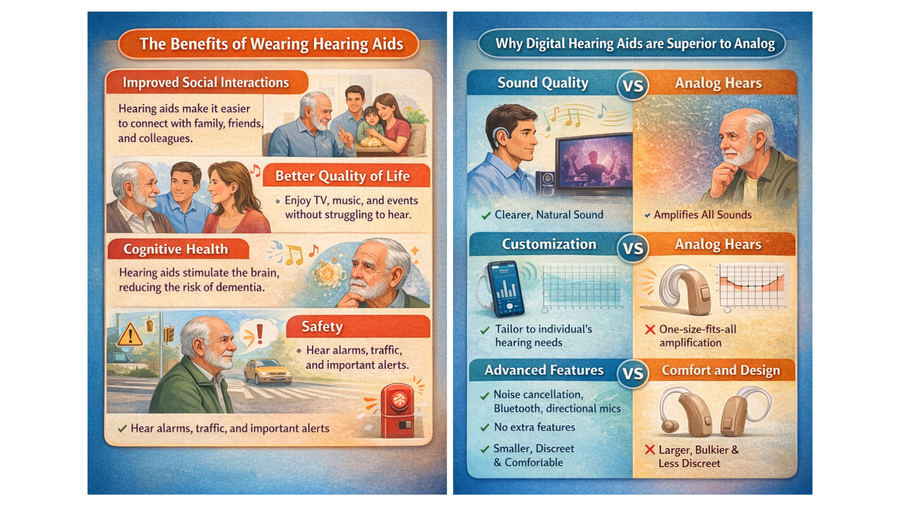
1. The Benefits of Wearing Hearing Aids
- Improved Social Interactions: Hearing aids allow individuals to participate in conversations, making it easier to connect with family, friends, and colleagues.
- Better Quality of Life: People who wear hearing aids report better overall life satisfaction, as they can enjoy activities like watching TV, listening to music, and attending events without struggling to hear.
- Cognitive Health: Studies show that untreated hearing loss can lead to cognitive decline and increase the risk of dementia. Wearing hearing aids can help stimulate the brain and keep it active.
- Safety: Hearing aids allow people to hear important sounds such as alarms, traffic, and emergency alerts, improving their safety.
2. Why Digital Hearing Aids are Superior to Analog
- Sound Quality: Digital hearing aids provide clearer, more natural sound by processing the sound digitally before amplifying it. Analog hearing aids simply amplify all sounds, including background noise, which can make it harder to hear conversations.
- Customization: With customization, digital hearing aids can be fine-tuned to match the specific frequency needs revealed in a hearing test. This leads to a solution that is better suited and more effective.
- Advanced Features: Modern digital hearing aids come with features like noise cancellation, Bluetooth connectivity, and directional microphones that allow for better hearing in noisy environments.
- Comfort and Design: Today’s digital hearing aids are smaller, more comfortable, and less visible than older analog models, which helps reduce the stigma associated with wearing them.
Many people in Jalandhar still wear analog hearing aids out of habit or lack of knowledge about the benefits of digital aids. It’s important for these individuals to consult with an audiologist to determine if an upgrade to digital hearing aids could improve their hearing experience.
Overcoming the Stigma in Jalandhar
To help individuals in Jalandhar understand the importance of hearing aids and remove the stigma surrounding hearing loss, we need to foster a culture of awareness. Hearing loss is nothing to be ashamed of; it’s a medical condition that can be managed with the right tools. Local healthcare professionals, audiologists, and even social media campaigns can help educate the public about the benefits of hearing aids and how they can significantly improve one’s life.
Conclusion: Don’t Let Hearing Loss Hold You Back
Hearing loss is a serious condition, and ignoring it can have long-term consequences. However, the good news is that hearing aids offer an effective and affordable solution to manage hearing loss. For residents of Jalandhar, it’s essential to take proactive steps in addressing hearing issues, whether it’s through early detection, treatment, or upgrading to digital hearing aids.
By removing the stigma and embracing hearing aids, we can help improve the quality of life for countless individuals in Jalandhar, ensuring that they stay connected with their families, enjoy life to the fullest, and preserve their cognitive health. Don’t let hearing loss control your life—take action today, visit a professional, and discover the difference hearing aids can make. Follow us for more such content.